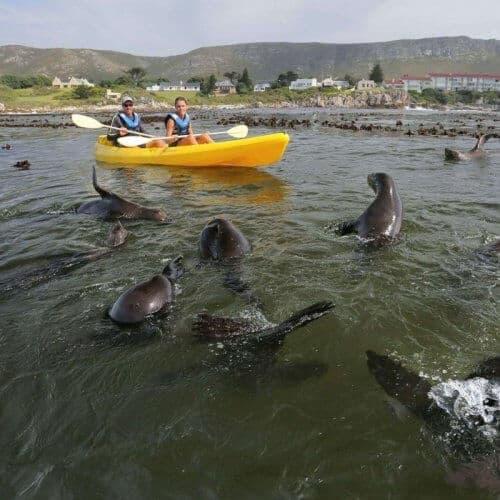
The safety system experienced South African paddlers use every time they launch — equipment, conditions, communication and what to do when something goes wrong.
Surfski is a safe sport practised in a serious environment. Cape Town's water is cold, its wind is strong and its coastline is exposed to Southern Ocean swell. Every experienced local paddler runs the same short checklist before launching.
Personal flotation device
Wear a paddling-specific PFD. It keeps you afloat while you recover from a fall, adds thermal protection in cold water and carries your phone or flares. Choose a low-profile design that does not interfere with the seat or your rotation.
Leash
An ankle leash keeps you attached to your boat. In 25 knots of wind, an unattached ski will outrun a swimmer within seconds. If you take one piece of advice from this guide, take this one.
Weather and wind
- Check wind speed, direction and the forecast trend before every paddle, not just the current reading.
- Offshore winds — south-easter on the Atlantic seaboard, north-wester in parts of False Bay — carry you away from shore. Beginners should never paddle in them.
- Above roughly 20 knots, conditions become downwind-only for experienced paddlers with support.
- The south-easter builds through the afternoon in summer; morning sessions are consistently calmer.
- Cold fronts in winter can raise swell by several metres within hours.
Swell
Swell height matters less than swell period and direction. A long-period Southern Ocean groundswell breaks heavily over reefs and headlands that look harmless on a chart. Launch and landing points — Kommetjie, Scarborough, Miller's Point — should always be assessed on the day, and a guide will change the route rather than the plan.
Remounts and rescue procedure
- 1Stay with your ski. It floats and it is far more visible than a head in the water.
- 2Recover your paddle, then remount from the side: chest across the boat, hips onto the seat, legs in, sit up.
- 3If you cannot remount in rough water, lie on the ski and paddle with your hands towards shelter.
- 4Signal another paddler; a raised paddle held horizontally overhead is the standard distress signal.
- 5If you are in trouble, call the NSRI on 087 094 9774 or 112 from a mobile.
Communication
- Phone in a waterproof pouch, attached to you or your PFD.
- The free NSRI SafeTrx app logs your route and alerts contacts if you overrun your return time.
- A whistle on your PFD and, on longer expeditions, a VHF radio or personal locator beacon.
- Always tell someone on shore your launch point, route and expected return time.
Why beginners should paddle guided
A guide reads the wind and swell, chooses a route with escape options, carries communications and a tow line, and can perform an assisted remount. On our tours group sizes are small, guides paddle with you rather than ahead of you, and routes are changed or postponed whenever conditions are outside the safe range for the group.
Beginner rules
- Never paddle alone as a beginner.
- Practise the remount at the start of every session.
- Stay inside the bay and within swimming distance of shore in your first sessions.
- Dress for the water temperature.
- Turn back early — the wind almost always increases later in the day.
Frequently asked questions
Surfski Safety Guide — FAQs
Keep reading
Related guides
Cape Town Surfski Adventures
Guided downwind runs, flat-water paddles and coastal expeditions.
Read guideHermanus Whale Watching
Southern right whales in Walker Bay from June to December.
Read guideSea Kayaking Hermanus
Walker Bay paddling for those who prefer a stable double kayak.
Read guideCape Town Hiking Tours
Table Mountain and Peninsula trails on your non-paddling days.
Read guide