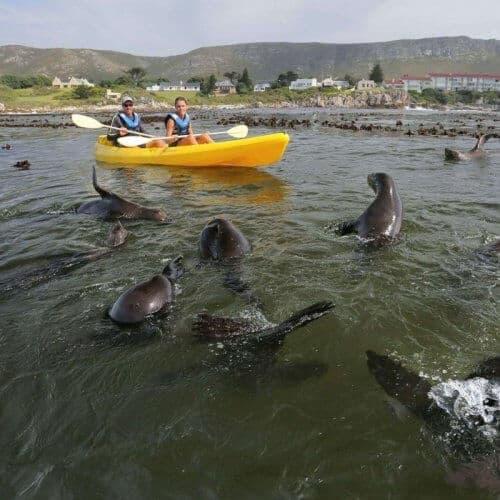
Cape Town paddles all year. Summer is downwind season, autumn is glassy, winter is for the brave and spring puts whales on the route.
Cape Town's paddling calendar is written by the wind. The summer south-easter creates the downwind runs the city is famous for; the winter north-wester brings swell and cold fronts; and the shoulder seasons deliver the still, glassy mornings beginners love.
Summer: December to February
Peak downwind season. The south-easter generates the runs across False Bay that make Miller's Run — Miller's Point to Fish Hoek — one of the world's best-known downwind paddles. Water in False Bay reaches 18 to 20°C. Sheltered morning paddles suit beginners; Miller's Run tandem guests and experienced single-surfski paddlers are assessed by their guide for suitable conditions.
Autumn: March to May
Our favourite season. The wind eases, mornings are often mirror-flat, the water is still warm from summer and the light is superb. This is the ideal window for first-timers, for coastal exploration paddles along Kommetjie and Scarborough, and for long, comfortable distance days.
Winter: June to August
Cold fronts, big Atlantic swell and water dropping to 13 to 16°C. Paddling continues between fronts, mostly in sheltered False Bay and Walker Bay, and the reward is whales: southern rights arrive in numbers from June. Winter paddling needs proper thermal kit and a conservative attitude to conditions.
Spring: September to November
Arguably the best all-round month range. Peak southern right whale season in September and October overlaps with warming days and the return of the south-easter, so you can paddle sheltered whale routes in the morning and catch early downwind runs later in the season.
Downwind season explained
- Wind: south-easterly, 15 to 30 knots, typically strongest from midday onward.
- Classic run: Miller's Point to Fish Hoek in False Bay.
- West Coast alternatives around Langebaan, Britannia Bay and Paternoster when False Bay is wrong.
- Miller's Run single surfskis require appropriate ocean experience; assessed guided doubles may suit guests without previous downwind experience. The essential local shuttle is included.
Flat-water paddling
For beginners and for anyone who prefers scenery to adrenaline, flat water is available year-round: the Langebaan lagoon in the West Coast National Park, Simon's Town to Boulders, Fish Hoek corner, and Walker Bay at Hermanus. Early mornings are almost always the calmest part of the day.
Wildlife by season
- June to December: southern right whales in Walker Bay and False Bay.
- Year-round: Bryde's whales, Cape fur seals, African penguins at Boulders, dolphins.
- Summer: sunfish, gannet feeding frenzies and big anchovy shoals.
- Winter and spring: humpback migration and heavy seabird passage.
Whatever month you visit, we will match the route to the conditions on the day — and if the water says no, a Table Mountain hike or a Peninsula tour usually says yes.
Frequently asked questions
Best Time of Year for Surfskiing in Cape Town — FAQs
Keep reading
Related guides
Cape Town Surfski Adventures
Guided downwind runs, flat-water paddles and coastal expeditions.
Read guideHermanus Whale Watching
Southern right whales in Walker Bay from June to December.
Read guideSea Kayaking Hermanus
Walker Bay paddling for those who prefer a stable double kayak.
Read guideCape Town Hiking Tours
Table Mountain and Peninsula trails on your non-paddling days.
Read guide